Rolled Malfoof (Stuffed Cabbage Rolls)

Malfoof is a traditional Middle Eastern dish of cabbage leaves wrapped around a seasoned mixture of rice and lamb, then slowly simmered with garlic, dried mint and lemon. The long, gentle cooking time softens the cabbage and allows the rice to absorb the flavour of the meat, spices and cooking liquid.
What distinguishes malfoof from many other stuffed vegetable dishes is the combination of warming spices with generous amounts of garlic, dried mint and lemon. The filling is rich and savoury, while the lemon added at the end gives the finished dish the acidity it needs to balance the lamb and vegetable oil.
Flat cabbage is particularly well suited to this recipe because its broad, relatively thin leaves are easier to blanch, portion and roll than tightly packed round cabbage.
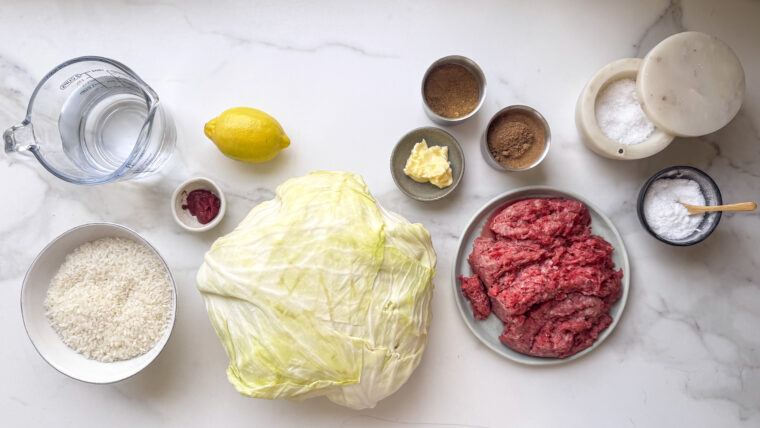
Ingredients Used For Rolled Malfoof
Vegetables:
Flat cabbage: The wrapper for the filling. Choose a large head with broad, flexible leaves. Blanching softens the leaves so they can be rolled without tearing. Trimming the thick central stems also makes rolling easier.
Rice: Forms the bulk of the filling and absorbs the lamb juices, spices and cooking liquid as it cooks. Soaking the rice for 30 minutes helps it hydrate and cook evenly inside the cabbage.
Lamb: Adds richness and savoury flavour. A roughly minced lamb works well because it retains some texture rather than disappearing into the rice.
Salt: Seasons both the rice and meat and is particularly important because rice absorbs a considerable amount of seasoning as it cooks.
Black and white pepper: Black pepper provides warmth and a slightly sharper flavour, while white pepper gives a more subtle background heat.
Cinnamon: Adds gentle warmth without making the filling sweet. It is commonly used in savoury Middle Eastern rice and meat dishes.
7-spice: Gives the filling its characteristic aromatic depth. The exact blend varies, but it generally contains warming spices that complement lamb.
Cumin and coriander: Add earthy, savoury notes that balance the sweeter aromatics in the spice mixture.
Vegetable oil: Keeps the rice filling moist and prevents it from becoming dry during the long cooking process.
Garlic: Whole cloves slowly soften between the layers of cabbage and flavour the cooking liquid. Don’t finely chop them; leaving them whole gives a gentler flavour as they cook.
Dried mint: One of the defining flavours of malfoof. It pairs particularly well with cabbage, garlic and lemon and perfumes the rolls as they simmer.
Lemon juice: Added after cooking to provide acidity and balance the richness of the lamb and oil. The amount can easily be adjusted according to taste.
Alternative Ingredients
Cabbage: If flat cabbage is unavailable, use a large green or white cabbage. The leaves may be thicker, so blanch them until sufficiently flexible and trim the central rib well.
Lamb: Beef can be used instead, or try a mixture of beef and lamb for a slightly milder flavour.
7-spice: If you don’t have a prepared Middle Eastern 7-spice blend, use a combination of allspice, cinnamon, black pepper, coriander, cumin, cloves and nutmeg.
Fresh mint: Dried mint is preferable because its concentrated flavour holds up well during simmering. If substituting fresh mint, use more and expect a fresher but less pronounced mint flavour.
Vegetarian version: Omit the lamb and increase the rice, adding finely chopped onion, tomato and herbs for additional flavour and moisture. The seasoning and cooking liquid may need adjusting because there will be no rendered fat from the lamb.
Preparation Tips For Rolled Malfoof
- Don’t overcook the cabbage during blanching. The leaves only need to become flexible enough to separate and roll. They will continue cooking for another hour or more in the pot.
- Remove the leaves gradually. As the cabbage blanches, peel away the softened outer leaves and return the remaining head to the water. This prevents the outer leaves from becoming excessively soft while waiting for the centre to cook.
- Trim rather than completely remove thick stems. Shave down the thick central rib with a knife so the leaf lies relatively flat without creating holes.
- Drain the soaked rice thoroughly. Excess water can make the filling difficult to work with and affect the amount of cooking liquid required.
- Don’t overfill the rolls. The rice expands considerably as it cooks. Use enough filling to create a neat, compact roll while leaving space for the rice to expand.
- Roll firmly but not excessively tightly. If the cabbage is wrapped too tightly, the expanding rice can split the leaves.
- Pack the rolls closely together. A tightly packed pot prevents them from moving and opening during cooking.
- Protect the bottom of the pot. A layer of leftover or torn cabbage leaves creates a buffer between the stuffed rolls and the base of the pan.
- Use a heatproof plate. Placing a plate directly over the rolls keeps them compressed and submerged while they simmer.
- Keep the simmer gentle. Once the liquid reaches a boil, reduce the heat. Vigorous boiling can cause the rolls to move around and unravel.
- Check the liquid during cooking. The rice needs enough moisture to cook fully. If the pot becomes dry before the rice is tender, add a little hot water rather than cold water.
Serving Suggestions For Rolled Malfoof
- Allow the malfoof to rest for about 10 minutes after adding the lemon juice. This gives the rice time to settle and allows the rolls to absorb some of the remaining cooking liquid.
- Serve the cabbage rolls warm with some of the softened garlic cloves from the pot. Spoon a little cooking liquid over the top if desired and offer additional lemon wedges alongside for anyone who prefers more acidity.
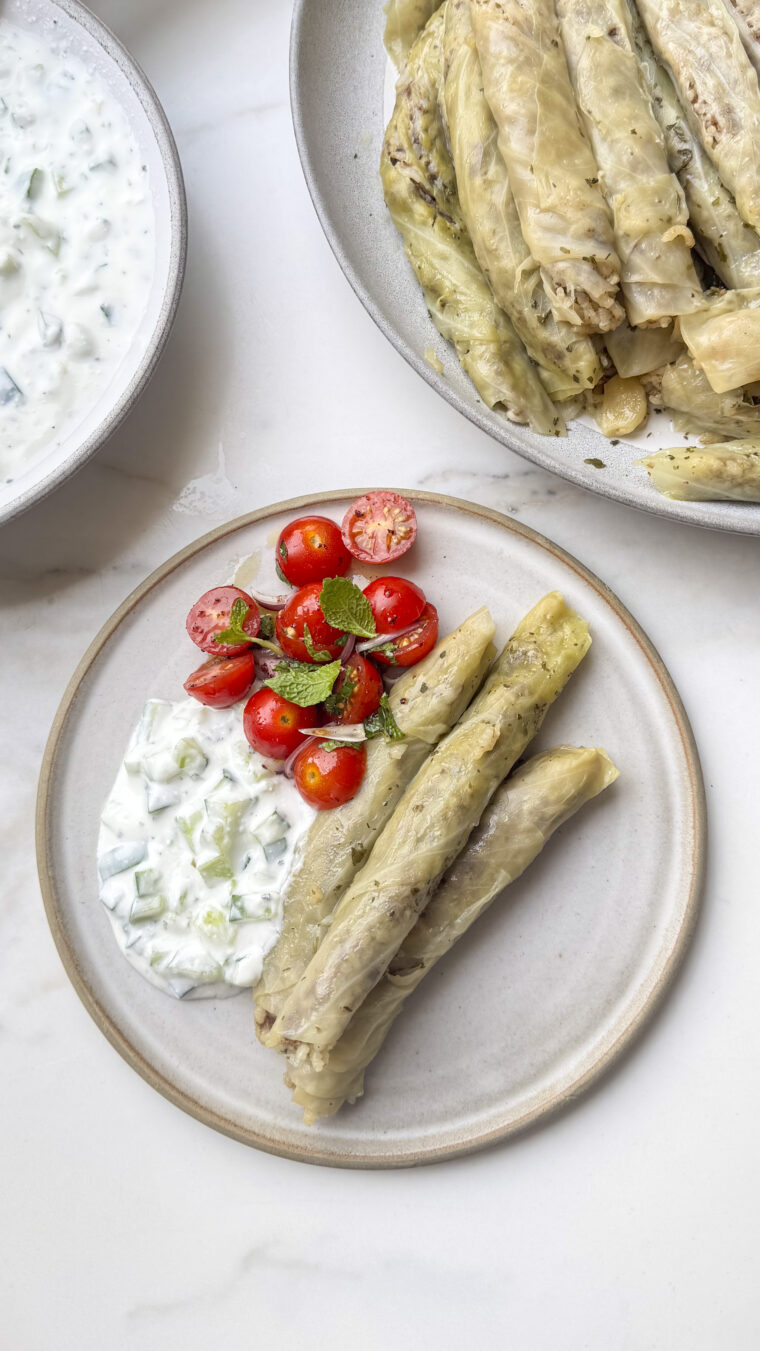
- Malfoof works well as a complete meal because it already contains vegetables, rice and meat. For a larger spread, serve it alongside a simple cucumber and yoghurt salad, plain yoghurt, a fresh Arabic salad or other stuffed vegetables.
- A final sprinkle of dried mint can reinforce the flavours already used during cooking.
Serving Suggestions
- Allow leftover malfoof to cool before transferring it to an airtight container.
- Refrigerator: Store for up to 3–4 days. Keep some of the cooking liquid with the rolls to prevent the rice and cabbage from drying out.
- Freezer: Cooked cabbage rolls can be frozen for approximately 2–3 months. Arrange them in a freezer-safe container with a little cooking liquid and freeze once completely cooled.
- Reheating: For the best texture, reheat gently in a covered saucepan with a small splash of water or cooking liquid until thoroughly heated. They can also be reheated in the microwave, covered, so the cabbage and rice retain their moisture.
- Add an extra squeeze of fresh lemon after reheating if needed, as the acidity becomes less pronounced during storage.
Rolled Malfoof (Stuffed Cabbage Rolls)
Ingredients
- 1 cabbage head, large flat
- 4 cups rice, washed and soaked for 30 minutes
- 300 g lamb, roughly minced
- 3 tsp salt
- 1 tsp black pepper
- ½ tsp white pepper
- 1 tsp cinnamon
- 1 tsp 7-spice
- 1 tsp cumin
- 1 tsp coriander
- ¾ cup vegetable oil
- 1 garlic bulb, cloves peeled
- ¼ cup dried mint
- Juice of 1 lemon, or to taste
Instructions
- Core the cabbage and blanch it in boiling water for 10–15 minutes, removing the leaves as they soften. Set leaves aside to cool, then trim the thick stems to ease rolling.
- In a large bowl, combine the soaked rice, minced lamb, salt, black pepper, white pepper, cinnamon, 7-spice, cumin, coriander and vegetable oil. Mix well to combine.
- Place a leaf on a flat surface, add a spoonful of filling near the base, and roll tightly into a small log, tucking in the sides if necessary. Repeat with remaining leaves and filling.
- Line the bottom of a large pot with torn or leftover cabbage leaves. Arrange the stuffed cabbage rolls tightly in layers, sprinkling peeled garlic cloves and dried mint between each layer.
- Add enough water to barely cover the rolls. Place a heatproof plate over the rolls to keep them submerged. Bring to a boil, then reduce heat to low, cover, and simmer for 1 to 1½ hours, or until cabbage and rice are tender.
- Once cooked, pour lemon juice over the rolls and let them rest for 10 minutes before serving. Adjust lemon to taste.
Did you make this recipe?
Tag @cookingwithzahra on Instagram and hashtag it #cookingwithzahra so we can see all the deliciousness!