Khoresht-e Beh (Persian Quince & Lamb Stew)

This Khoresht-e Beh is a Shirazi recipe that I learnt from Maman Nahid, my sister Zeina’s mother-in-law. I have always loved learning recipes from the women in my family and extended family, especially dishes that have been cooked for years and passed from one person to another.
This version is made with tender lamb, quince, yellow split peas and aloo Bukhara, slowly cooked with saffron and finished with sugar and fresh lemon juice. Like so many Persian khoreshts, it is all about finding the right balance of flavours. It should be sweet and sour, rich without feeling heavy, with the different ingredients complementing rather than overpowering one another.
What I love about recipes like this is how they are passed down through generations and families. I learnt this one from Maman Nahid, and now it has become a dish that I make and share at my own table. Maman Nahid likes to prepare this dish with boneless lamb shanks or cubes; I have become a fan of preparing traditional recipes with lamb shanks. It feels more ‘majlesi’ as my grandmother would say – meaning ideal for hosting your guests.
Serve Khoresht-e Beh with steamed Persian rice, with plenty of the sauce spooned over the top. It is comforting, full of flavour and, for me, made even more special because of the person who taught me how to make it.
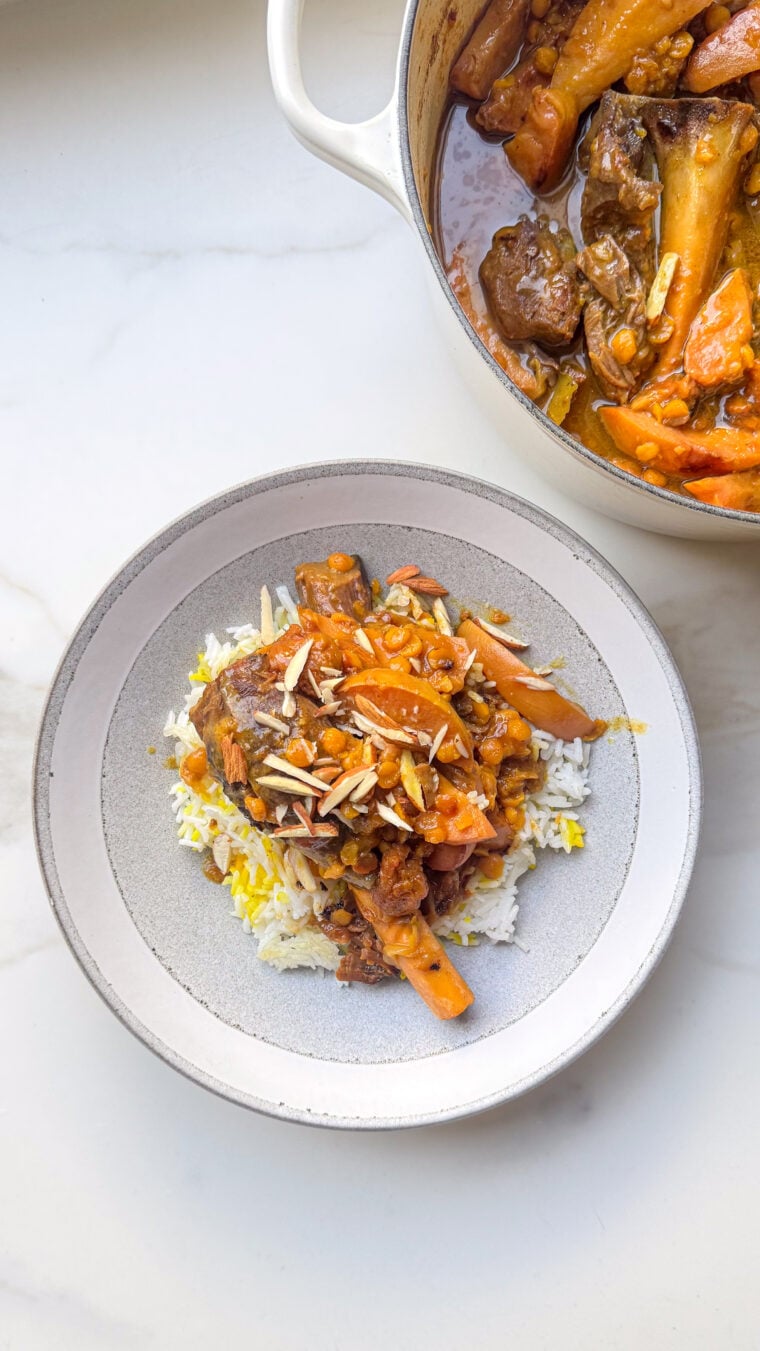
Ingredients Used For Khoresht-e Beh (Persian Quince & Lamb Stew)
Lamb: Lamb shanks or other bone-in lamb pieces work particularly well because the long, slow cooking makes the meat tender while adding richness to the sauce.
Quince: Choose firm, fragrant quince without significant bruising or soft spots. The quince is sautéed separately before being added to the stew, which helps it retain its shape during the final stage of cooking.
Yellow Split Peas: Add texture and substance to the khoresht. Parboiling them separately gives you greater control over their texture and prevents them from becoming too soft in the stew.
Aloo Bukhara: These dried plums bring a lovely tart sweetness to the khoresht and complement the quince beautifully.
Onion: Slowly sautéed onion forms the savoury base of the stew.
Garlic & Ginger: Add warmth and depth to the lamb without overpowering the more delicate flavour of the quince.
Turmeric: Adds warmth, earthiness and colour to the lamb as it cooks.
Saffron: Gives the khoresht its distinctive Persian aroma and another layer of flavour. Grind the saffron before blooming it in hot water to release its colour and fragrance.
Sugar: A small amount enhances the natural sweetness of the quince and balances the acidity of the lemon and dried plums. Adjust according to the sweetness of your fruit.
Fresh Lemon Juice: Provides the sour element of the sweet-and-sour balance. Add it towards the end so you can adjust the final flavour more accurately.
Almond Slivers: Used as a simple garnish to add a little texture to the finished dish.
Alternative Ingredients
Lamb: For a different variation, replace the lamb with braised short ribs or saffron chicken. For a vegan version, use chickpeas in place of the meat.
Aloo Bukhara: If you cannot find yellow dried plums, other tart dried plums or prunes can be used, although the flavour and sweetness will vary.
Yellow Split Peas: They can be omitted if you prefer a simpler quince and lamb khoresht, although they add a lovely texture to the traditional-style stew.
Sugar: The amount will depend on the natural sweetness of your quince and dried plums. Start with less and add more after tasting.
Preparation Tips for Khoresht-e Beh (Persian Quince & Lamb Stew)
- Don’t Overcook the Quince: The quince should be completely tender when served but still hold its shape. Sautéing it separately before adding it to the stew helps give you more control over the texture.
Cut the quince into evenly sized pieces so they cook at approximately the same rate. - Parboil the Split Peas Separately: Cook the soaked split peas until they are partially tender but still firm enough to hold their shape. They will continue cooking once they are added to the khoresht.
If they are fully cooked before being added, they can become too soft during the final simmer. - Give the Lamb Enough Time: The first stage of cooking is all about making sure the lamb becomes tender. Depending on the size and cut of the meat, this may take anywhere from 60–90 minutes or slightly longer.
Don’t add the quince simply because the suggested time has passed. Wait until the lamb is almost completely tender before moving on to the next stage. - Bloom the Saffron: Finely grind the saffron threads before adding the hot water. Leave the mixture to infuse for 5–10 minutes before adding it to the stew.
- Adjust the Sweet and Sour Flavours at the End: Quince and dried plums vary naturally in sweetness and acidity, so use the quantities of sugar and lemon juice as a starting point.
Once everything has cooked together, taste the khoresht. Add a little more sugar if it is too tart or additional lemon juice if it needs more acidity.
The goal is balance rather than a distinctly sweet stew. - Stir Gently: Once the quince has been added, avoid stirring the stew too vigorously. The fruit becomes delicate as it cooks and can easily break apart.
Serving Tips for Khoresht-e Beh (Persian Quince & Lamb Stew)
- Serve Khoresht-e Beh warm with steamed Persian rice or saffron rice. Spoon some of the sauce over the rice and make sure each serving has lamb, quince, split peas and dried plums.
- For a traditional Persian-style meal, serve it alongside a simple Shirazi salad, fresh herbs or mast-o-khiar.
- Finish the khoresht with almond slivers just before serving.
Storage Instructions
- Allow any leftover Khoresht-e Beh to cool before transferring it to an airtight container.
- Refrigerator: Store for up to 3 days. Reheat gently over low heat, adding a small splash of water if the sauce has thickened too much.
- Freezer: The lamb and sauce can be frozen, although the quince may become softer after thawing. Freeze in an airtight container and thaw overnight in the refrigerator before gently reheating.
Khoresht-e Beh (Persian Quince & Lamb Stew)
Ingredients
For the Lamb
- 500 g boneless lamb shoulder, cut into large pieces, or 1kg bone-in lamb shanks
- salt, to taste
- 6 tbsp all-purpose flour
- 1 tsp cinnamon, ground
- 1 tsp turmeric, ground
- 1 tsp white pepper, ground
- 1 tsp black pepper, ground
- 3 tsp Arabic 7-spice
- ½ tsp cardamom, ground
- vegetable oil, for searing
For the Saffron Infusion
- Pinch of saffron threads, finely ground
- 1 tsp rosewater
- ¼ cup boiling water
For the Stew
- 3 large onions, thinly sliced
- 2 garlic cloves, minced
- 1 tsp fresh ginger, finely grated
- 1 bay leaf
- 1 cinnamon stick
- 1 tbsp honey
- 3 cups water, plus more as needed
- ¾ cup yellow split peas, soaked and drained
- 2-3 medium quince
- ¾ cup aloo Bukhara, yellow dried plums
- 2-3 tbsp granulated sugar, or to taste
- 2 tbsp fresh lemon juice, or to taste
- 2 tbsp almond slivers, to garnish
To Serve
- Steamed Persian rice
Instructions
- Pat the lamb dry and season lightly with salt. In a shallow bowl, combine the flour, cinnamon, turmeric, white pepper, black pepper and 7-spice. Coat the lamb generously in the seasoned flour and shake off any excess.
- Grind the saffron threads using a small mortar and pestle. Combine with the rosewater and boiling water. Stir and leave to infuse while you prepare the lamb.
- Heat a generous drizzle of vegetable oil in a large, heavy-bottomed or cast-iron pot over medium-high heat. Working in batches if necessary, sear the lamb until deeply browned on all sides. Transfer to a plate and set aside.
- Reduce the heat to medium. Add a little more oil if needed, followed by the sliced onions. Cook until soft and golden, scraping up the browned bits from the base of the pot as the onions cook. Add the garlic and ginger and cook for about 1 minute, until fragrant.
- Return the lamb to the pot. Add the bay leaf, cinnamon stick, honey, saffron and rosewater infusion and 3 cups water. Bring to a boil, then reduce the heat to low. Cover and simmer gently for 60–90 minutes, or until the lamb is almost completely tender. Add a little more hot water during cooking if needed.
- Meanwhile, bring a small saucepan of water to a boil. Add the soaked and drained yellow split peas and cook until partially tender but still holding their shape. Drain and set aside.
- Wash the quince well, quarter and remove the cores. Cut into evenly sized bite-sized pieces. Heat a little vegetable oil in a large frying pan over medium heat. Add the quince and sauté, turning occasionally, until lightly golden. Add a small splash of water, cover and cook briefly until the quince begins to soften but still holds its shape. Remove from the heat.
- Once the lamb is tender, add the sautéed quince, aloo Bukhara and parboiled split peas. Add 2 tablespoons sugar and gently stir to combine. Cover and simmer over low heat for approximately 30 minutes, until the quince is tender, the split peas are cooked through and the sauce has thickened. Stir gently to avoid breaking apart the quince.
- Add the lemon juice and taste. Adjust with additional sugar, lemon juice or salt as needed. The finished Khoresht-e Beh should have a balanced sweet-and-sour flavour.
- Simmer uncovered for a final 2–5 minutes, or until the sauce reaches your preferred consistency. Remove the bay leaf and cinnamon stick.
- Transfer to a serving dish and garnish with almond slivers. Serve warm with steamed Persian rice.
Did you make this recipe?
Tag @cookingwithzahra on Instagram and hashtag it #cookingwithzahra so we can see all the deliciousness!