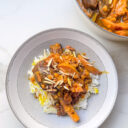
Tas Kabab (Persian One-Pot Meat & Vegetables)

Tas Kabab is a traditional Persian one-pot dish made by layering meat with vegetables and slowly cooking everything together until tender. It is a familiar home-style dish made across Iran, with recipes varying from one family to another depending on the vegetables, fruit and meat they like to use.
This is the version my mother taught me, made with layers of meat, onions, potatoes, carrots, aubergine, tomatoes, quince and dried plums, all slowly cooked in a lightly spiced tomato sauce. As everything cooks, the vegetables soften, the meat becomes tender and their juices come together to create a rich, flavourful sauce.
Tas Kabab can be made throughout the year, but this particular version is one I associate with autumn, when quince comes into season. My mother would add quince to the pot alongside the vegetables and dried plums, bringing a subtle sweetness and tartness that balances the richness of the meat and tomato sauce.
It is simple, comforting home cooking: everything is layered into one pot and given time to cook slowly. It is exactly the kind of recipe I love returning to when the seasons begin to change.
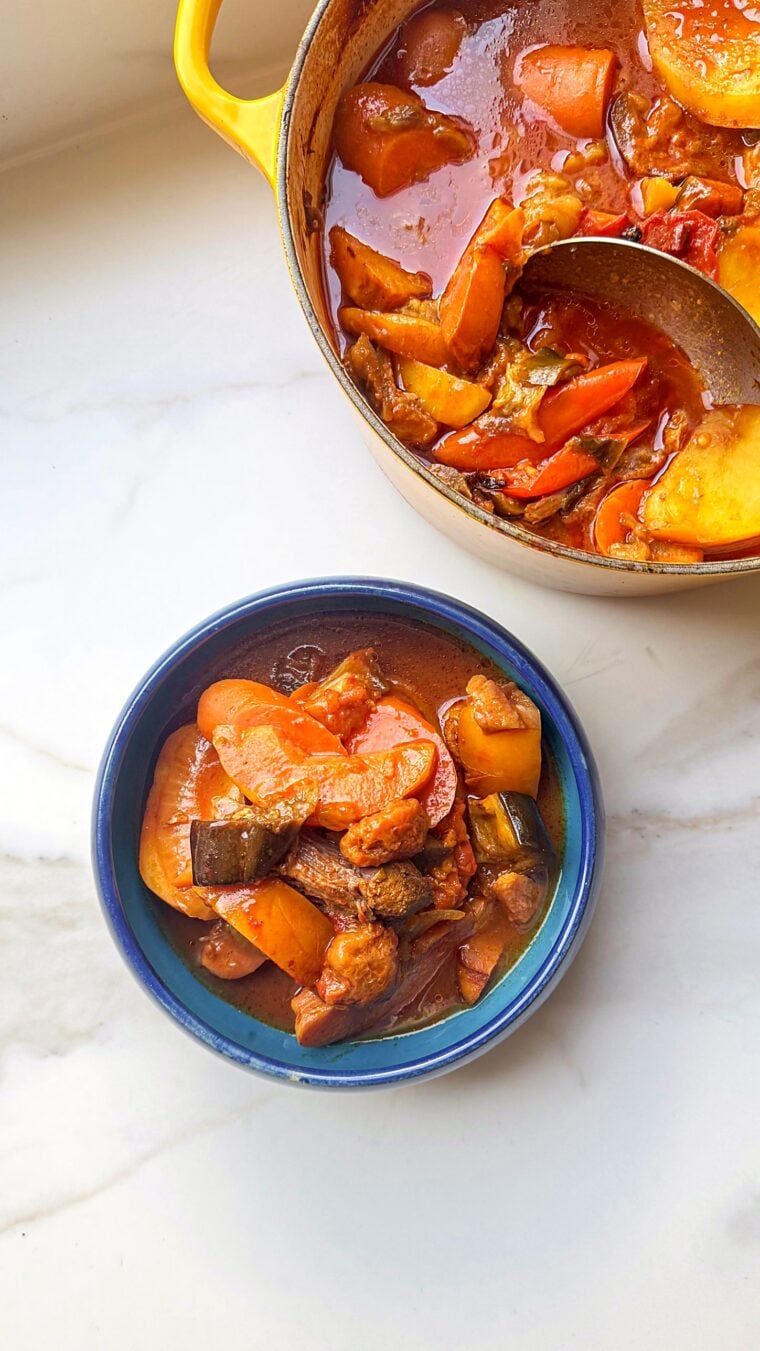
Ingredients Used for Tas Kabab (Persian One-Pot Meat & Vegetables)
One-Pot Meat & Vegetables:
Meat: Lamb or beef work particularly well for Tas Kabab because they become tender during the long, slow cooking. Chicken can also be used for a lighter and quicker variation.
Onions: The onions form the first layer of the dish. As they cook beneath the meat and vegetables, they soften and become part of the sauce.
Potatoes: Potatoes make the dish hearty and absorb the flavours of the cooking liquid. Cut them into relatively large wedges so they hold their shape.
Carrots: Add a gentle sweetness and work particularly well with the quince and dried plums.
Quince: The addition that makes this version particularly suited to autumn. Its subtle sweet-and-tart flavour complements the meat, vegetables and tomato sauce.
Aubergine: Becomes wonderfully soft as it cooks and absorbs the flavours of the sauce.
Tomatoes: Fresh tomato slices are arranged over the top of the pot, adding acidity and moisture as they slowly cook down.
Dried Plums or Prunes: Add a sweet-and-sour element to the dish. Their flavour becomes part of the sauce as they soften.
Garlic: Whole garlic cloves slowly soften as the Tas Kabab cooks, adding flavour without becoming overpowering.
Tomato Paste: Creates the base of the cooking sauce and adds richness and depth.
Turmeric: The main spice in this recipe, adding warmth, colour and an earthy flavour.
Lemon Juice: Balances the sweetness of the vegetables, quince and dried fruit and gives the sauce a little acidity.
Alternative Ingredients
Meat: Use lamb, beef or chicken depending on your preference. Lamb shoulder, lamb shanks, beef short ribs or other cuts suited to slow cooking work particularly well. If using chicken, reduce the cooking time accordingly.
Quince: If quince is out of season, simply leave it out and make the Tas Kabab with the remaining vegetables.
Dried Plums: Prunes can be used in place of dried plums. Adjust the quantity depending on their size and sweetness.
Aubergine: Courgette can be substituted for aubergine, although it cooks more quickly and will have a softer texture.
Potatoes: Use any waxy or all-purpose potato that holds its shape well during slow cooking.
Preparation Tips for Tas Kabab (Persian One-Pot Meat & Vegetables)
- Choose the Right Cut of Meat: For lamb or beef, choose a cut that benefits from slow cooking. The meat needs enough time to become tender while the vegetables cook around it.
Bone-in cuts can add additional richness to the sauce, but boneless meat works well too. - Cut the Vegetables Generously: Avoid cutting the vegetables too small. Tas Kabab cooks for a long time, particularly when made with lamb or beef, so larger pieces are less likely to completely break down.
Cut the potatoes and quince into wedges and the aubergine into generous cubes. - Layer Rather Than Stir: The way Tas Kabab is assembled is part of what makes it so easy. Layer the ingredients into the pot and leave them largely undisturbed while they cook.
The onions and meat sit closer to the heat, while the more delicate vegetables cook gently above them. - Keep the Heat Low: Once the pot has come to a boil, reduce the heat to a gentle simmer. Slow cooking allows the meat to tenderise and gives the different flavours time to come together.
- Adjust the Cooking Time for Chicken: Chicken cooks considerably faster than lamb or beef. Begin checking it after 45–60 minutes, depending on the cut and whether it is bone-in.
You may also want to cut the vegetables slightly smaller when making the chicken version so everything finishes cooking at approximately the same time. - Check the Liquid: Tas Kabab should have enough sauce to spoon over each serving, but it shouldn’t be soupy. The vegetables release additional liquid as they cook, so avoid adding too much water at the beginning.
If the pot becomes dry before the meat is tender, add a small amount of hot water.
Serving Tips for Tas Kabab (Persian One-Pot Meat & Vegetables)
- Tas Kabab is a complete meal on its own, with meat, potatoes and vegetables all cooked together in the same pot.
- Serve it warm, spooning the vegetables and meat onto each plate with plenty of the cooking juices.
- It is also lovely served with:
- Warm flatbread
- Steamed Persian rice
- Mast-o-khiar
- Plain yoghurt
- Fresh herbs
- A simple Shirazi salad
- Torshi or Persian pickles
Storage Instructions
- Allow leftover Tas Kabab to cool before transferring it to an airtight container.
- Refrigerator: Store for up to 3 days. Reheat gently on the stovetop over low heat or in the microwave until piping hot throughout.
- Freezer: The meat and sauce can be frozen, although the texture of the potatoes, aubergine and quince will become softer after thawing. For this reason, I prefer Tas Kabab freshly made or refrigerated rather than frozen.
Tas Kabab (Persian One-Pot Meat & Vegetables)
Ingredients
- 1 kg lamb or beef cubes
- 3 large onions, sliced
- 3 large potatoes, cut into wedges
- 3 medium carrots, sliced
- 1 large quince, cored and cut into wedges
- 1 large aubergine, cut into large cubes
- 2 tomatoes, sliced
- 1 cup dried plums or prunes
- 5 garlic cloves, peeled
- ⅓ cup tomato paste
- ¼ cup vegetable oil, divided
- 2 tsp ground turmeric
- Salt, to taste
- Freshly ground black pepper, to taste
- 2 tbsp freshly squeezed lemon juice
- 2 cups boiling water
Instructions
- Pour most of the vegetable oil into a large, heavy-bottomed pot. Arrange the sliced onions evenly across the base, then place the meat over the onions.
- Sprinkle the turmeric, salt and freshly ground black pepper over the meat.
- Layer the carrots, quince, dried plums, garlic, aubergine and potatoes over the meat.
- In a bowl or jug, combine the boiling water, tomato paste and lemon juice. Season with a little additional salt and stir until the tomato paste has dissolved.
- Pour the tomato mixture evenly over the meat and vegetables.
- Arrange the sliced tomatoes over the top and drizzle with the remaining vegetable oil.
- Cover the pot and bring to a boil over high heat.
- Reduce the heat to low and simmer gently, covered, for 2–2½ hours if using lamb or beef, or until the meat is tender and the vegetables are cooked through. Check occasionally and add a small amount of hot water if the pot becomes too dry.
- If using chicken, begin checking after 45–60 minutes, depending on the size and cut of the chicken. Continue cooking until the chicken is cooked through and the vegetables are tender.
- Taste the cooking juices and adjust the salt, pepper or lemon juice if needed.
- Serve directly from the pot, making sure each portion has some of the meat, vegetables, quince and dried plums. Spoon the cooking juices generously over the top.
Did you make this recipe?
Tag @cookingwithzahra on Instagram and hashtag it #cookingwithzahra so we can see all the deliciousness!